Soft Washing vs Pressure Washing: Which Method is Right for Your Home?
Not all exterior cleaning is the same. Learn the critical differences between soft washing and pressure washing, which method to use for each surface, and why using the wrong one could cost you thousands in damage.
Pasco County Pressure Washing
12/31/202510 min read
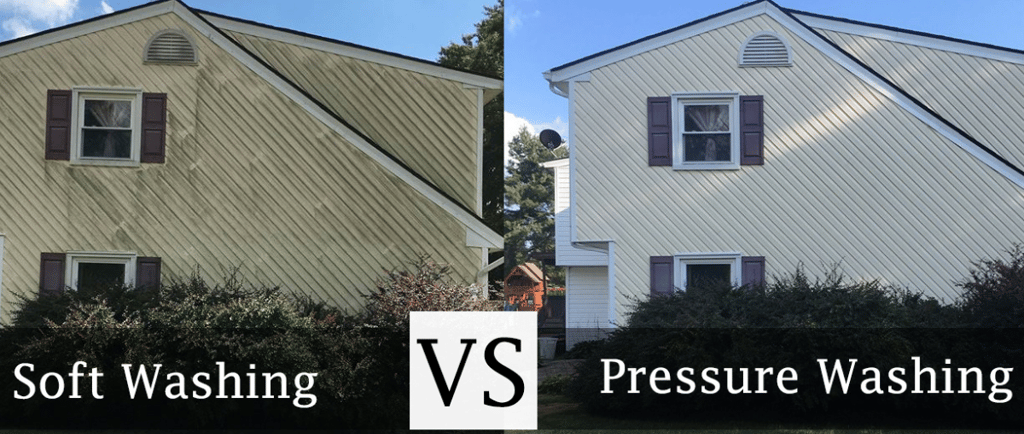
Soft Washing vs Pressure Washing: Which Method is Right for Your Home?
When it comes to cleaning your home's exterior in New Port Richey, Holiday, Trinity, Port Richey, or Hudson, you have two main options: soft washing and pressure washing. While many people use these terms interchangeably, they're actually very different cleaning methods—and using the wrong one can damage your property or deliver poor results.
So which method should you use? The answer depends on what you're cleaning. Let's break down everything you need to know about soft washing vs pressure washing so you can make informed decisions about exterior home cleaning.
What is Pressure Washing?
Pressure washing uses high-pressure water—typically 1,500 to 4,000 PSI (pounds per square inch)—to physically blast away dirt, grime, stains, and organic growth from surfaces.
How Pressure Washing Works
A pressure washer forces water through a pump that creates high pressure, then releases it through a specialized nozzle. The intense force of the water stream literally strips away contaminants from the surface.
Key characteristics of pressure washing:
High pressure: 1,500-4,000+ PSI depending on the surface
Mechanical cleaning: Physically removes contaminants through force
Cold water: Standard pressure washing uses unheated water
Fast results: You see immediate cleaning effects
Best for hard surfaces: Concrete, brick, stone, and other durable materials
When to Use Pressure Washing
Pressure washing excels at cleaning hard, durable surfaces that can withstand high pressure:
Driveways: Concrete and asphalt driveways with oil stains, tire marks, and ground-in dirt
Sidewalks and walkways: Heavy foot traffic areas with dirt buildup
Patios: Concrete or paver patios with stains and grime
Decks: Wooden decks before staining or sealing (with appropriate PSI)
Fences: Sturdy wood or vinyl fencing
Garage floors: Oil-stained concrete floors
Brick and stone: Durable masonry surfaces
The key is that these surfaces can handle the physical force without damage.
What is Soft Washing?
Soft washing is a low-pressure cleaning method that uses specialized cleaning solutions—primarily Sodium Hypochlorite (SH)—to chemically break down and kill organic growth like algae, mold, mildew, and bacteria.
How Soft Washing Works
Instead of relying on pressure to clean, soft washing uses chemistry. A Sodium Hypochlorite solution (professional-grade bleach) is mixed with water and surfactants, then applied to surfaces at very low pressure—around 100-500 PSI, similar to a garden hose.
Key characteristics of soft washing:
Low pressure: 100-500 PSI (won't damage delicate surfaces)
Chemical cleaning: Sodium Hypochlorite (SH) kills organisms at the root
Surfactants: Help solution adhere to vertical surfaces and penetrate growth
Extended dwell time: Solution stays on surface to work (often no rinsing needed)
Lasting results: Kills organisms completely, preventing rapid regrowth
Best for delicate surfaces: Siding, roofs, painted surfaces, and materials that could be damaged by high pressure
The Science Behind Soft Washing
Sodium Hypochlorite (SH) is a powerful oxidizing agent that breaks down organic matter at the molecular level. When applied to algae, mold, or mildew:
SH penetrates the cell walls of the organisms
It destroys their cellular structure from the inside
The organisms die at the root, not just on the surface
Dead growth either washes away naturally with rain or can be gently rinsed
Because the organisms are killed completely, regrowth is dramatically slowed
This is why soft washing results last 2-3 years on roofs, while pressure washing (which only removes surface growth) sees regrowth within months.
When to Use Soft Washing
Soft washing is the correct method for more delicate surfaces and anywhere organic growth is the primary problem:
Roofs: Asphalt shingles, tile, metal—ALWAYS use soft washing, never pressure wash
Vinyl siding: High pressure can crack, warp, or force water behind siding
Stucco: Pressure washing can damage the finish and create holes
Painted surfaces: Pressure can strip paint from wood, siding, or trim
Windows: Soft washing cleans without risk of breaking seals or glass
Gutters: Gentle cleaning that won't damage or dent
Wood surfaces: When cleaning rather than stripping (decks, fences)
Any surface with algae, mold, or mildew: SH kills it at the root
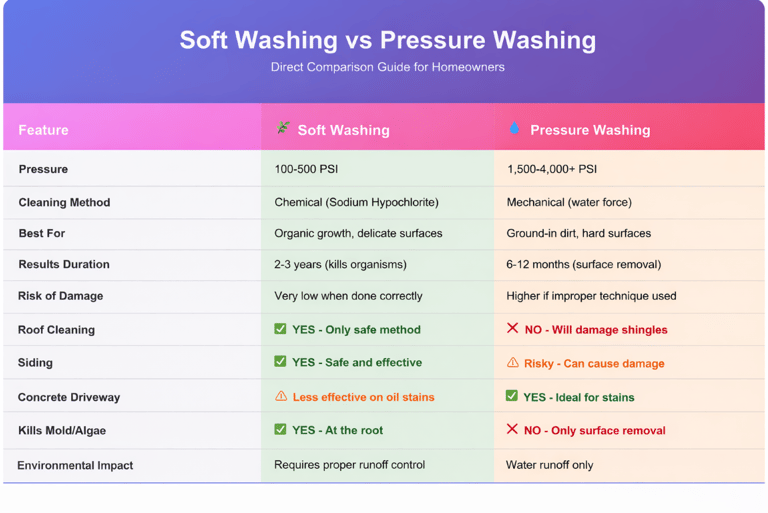
Soft Washing vs Pressure Washing: Direct Comparison
Surface-by-Surface Guide: Soft Wash or Pressure Wash?
Roofs (ALWAYS Soft Wash)
Method: Soft washing with Sodium Hypochlorite solution
Why: Pressure washing strips protective granules from shingles, voids warranties, forces water under shingles, and causes thousands in damage. Those black streaks are Gloeocapsa Magma algae—soft washing kills it at the root.
Process:
Apply SH solution at low pressure
Allow extended dwell time (no rinsing in most cases)
Rain naturally rinses over time
Results last 2-3 years
Never pressure wash your roof. This is the #1 mistake homeowners make.
House Siding
Vinyl Siding: Soft washing (pressure washing can crack or warp)
Wood Siding: Soft washing (pressure strips paint and damages wood)
Stucco: Soft washing only (pressure creates pockmarks and damage)
Brick: Can use pressure washing, but soft washing is gentler
Fiber Cement: Soft washing recommended
Why: Most siding materials can't withstand high pressure without damage. The dirt and stains on siding are typically organic growth (mold, mildew, algae) which soft washing kills effectively. Pressure washing might make it look clean temporarily, but the organisms will regrow quickly since they weren't killed.
Driveways
Concrete Driveways: Pressure washing for oil stains and ground-in dirt; soft washing for mold/mildew
Asphalt Driveways: Lower pressure washing (soft washing for organic growth only)
Paver Driveways: Pressure washing (medium pressure)
Why: Hard surfaces like concrete can handle the pressure needed to remove oil stains, tire marks, and ground-in dirt. However, if your driveway has green or black organic growth, pre-treating with SH solution before pressure washing provides better, longer-lasting results.
Decks
New/Sealed Decks: Soft washing to maintain the finish
Old Decks Needing Stripping: Pressure washing to remove old stain/sealant
Composite Decks: Soft washing only (pressure can damage composite materials)
Why: It depends on your goal. If you're preparing to restain, pressure washing strips the old finish. If you're maintaining a newer deck, soft washing cleans without damaging the wood or removing sealant.
Patios
Concrete Patios: Pressure washing
Stone Patios: Pressure washing (appropriate PSI for stone type)
Wood Patios: Soft washing
Screened Patios: Soft washing for screens; appropriate method for floor
Why: Like driveways, hard patio surfaces benefit from pressure washing's ability to remove ground-in dirt. Screens, furniture, and delicate elements should always be soft washed.
Fences
Vinyl Fences: Soft washing
Wood Fences: Soft washing (or low-pressure washing if very sturdy)
Metal Fences: Either method works
Chain Link: Pressure washing fine
Why: Most residential fences are delicate enough that pressure washing can cause damage, especially to vinyl or wood. Soft washing effectively removes mold, mildew, and organic staining without risk.
Gutters
Exterior Gutter Cleaning: Soft washing
Interior Gutter Cleaning: Low-pressure washing or manual removal
Why: Soft washing cleans tiger stripes (those vertical dark streaks on gutters) without denting or damaging gutters. High pressure can dent aluminum gutters.
Windows and Screens
Method: Soft washing only
Why: Pressure washing can break window seals, crack glass, tear screens, and force water into your home. Soft washing with appropriate cleaning solutions provides streak-free results safely.
Common Mistakes Homeowners Make
Mistake #1: Pressure Washing Roofs
This is the most expensive mistake. High pressure strips shingle granules, voids warranties, and causes leak points. Always use soft washing for roofs.
Mistake #2: Using High Pressure on Siding
Many homeowners or inexperienced contractors use too much pressure on vinyl siding, creating cracks, warping, or forcing water behind the siding where it causes mold and rot.
Mistake #3: Pressure Washing Without Pre-Treatment
Trying to pressure wash away mold or mildew without first applying SH solution means you're only removing surface growth. The organisms remain alive beneath and regrow quickly.
Mistake #4: DIY Soft Washing with Wrong Ratios
Homeowners who buy household bleach and attempt soft washing often use incorrect ratios—either too weak (ineffective) or too strong (damages plants and surfaces). Professional soft washing requires precise mixing.
Mistake #5: Not Protecting Landscaping
Both methods can harm plants if runoff isn't controlled. Professionals pre-wet vegetation, use plant guards, and rinse thoroughly to protect landscaping.
Mistake #6: Wrong Nozzle or Pressure Setting
Using a zero-degree nozzle or too much PSI can permanently etch concrete or damage surfaces. Different surfaces require different nozzles and pressure levels.
Mistake #7: Expecting Instant Results from Soft Washing
Soft washing works through chemistry, not force. While you'll see immediate improvement, full results appear over days or weeks as organisms die and wash away naturally.
Florida-Specific Considerations
Living in Pasco County means dealing with unique challenges that make understanding soft washing vs pressure washing especially important:
High Humidity
Our year-round humidity creates perfect conditions for organic growth. This means:
More frequent soft washing needed for roofs, siding, and fences
Mold and mildew return faster if organisms aren't killed at the root
Pressure washing alone won't solve the problem on surfaces prone to organic growth
Frequent Rain
While rain helps rinse surfaces after soft washing, it also means:
Constant moisture promotes algae and mildew growth
North-facing surfaces stay damp and need more frequent cleaning
Shaded areas near trees accumulate growth faster
Black Streaks on Roofs
Almost universal in Florida, these Gloeocapsa Magma algae stains:
Feed on limestone in asphalt shingles
Spread rapidly in humid conditions
Require soft washing only for safe, effective removal
Return quickly if pressure washed instead of properly treated with SH
Salt Air (Coastal Areas)
Homes in Port Richey, Hudson, and coastal areas of New Port Richey face:
Accelerated corrosion requiring regular cleaning
Salt buildup on siding and windows
Both methods may be needed: Soft washing for organic growth, pressure washing for salt deposits on hard surfaces
DIY vs Professional: Which Cleaning Method Can You Do Yourself?
DIY Pressure Washing
Feasibility: Possible for small, simple jobs
Risks:
Damaging surfaces with too much pressure
Inconsistent results
Injury from pressure washer kickback
Equipment rental costs add up
When DIY Makes Sense:
Small concrete areas (walkways)
You have experience with equipment
No organic growth (just dirt)
DIY Soft Washing
Feasibility: Not recommended
Risks:
Incorrect SH ratios (ineffective or damaging)
Safety hazards from chemicals
Damage to landscaping without proper protection
Inability to reach high areas safely
Poor results from improper technique
Why Hire Professionals: Professional soft washing requires:
Precise chemical mixing knowledge
Proper application equipment
Understanding of dwell times for different surfaces
Safety equipment for chemical handling
Experience with protecting landscaping
Insurance for chemical application
The cost savings of DIY soft washing rarely outweigh the risks of improper application.
Combining Both Methods for Best Results
Many professional exterior cleaning jobs benefit from using both methods strategically:
Full Property Cleaning
A complete house washing service might include:
Soft washing the roof, siding, gutters, and windows
Pressure washing the driveway, sidewalks, and concrete patio
Deck power washing (if preparing for staining) or soft washing (if maintaining)
Driveway with Organic Growth
The best approach for a moldy driveway:
Pre-treat with SH solution to kill mold and mildew
Allow dwell time for solution to work
Pressure wash to remove dead growth and dirt
Results last much longer than pressure washing alone
House Exterior
Optimal house washing combines:
Soft wash the siding to kill organic growth
Low-pressure rinse if immediate results needed
Pressure wash foundation and hard surfaces at ground level
Soft wash roof separately
Cost Comparison: Soft Washing vs Pressure Washing
Pressure Washing Costs: Generally less expensive per square foot because:
Faster application
No specialized chemicals needed
Less labor-intensive for hard surfaces
Soft Washing Costs: May cost slightly more because:
Specialized chemical costs
More time for application and dwell time
Requires more expertise and training
Results last much longer (better value long-term)
Important: The cost difference is minimal, and choosing the wrong method can cost you thousands in repairs. A $300 soft wash roof cleaning is far cheaper than a $10,000 roof replacement caused by pressure washing damage.
Environmental Considerations
Pressure Washing
Pros:
Uses only water (no chemicals for most applications)
Runoff is typically just dirty water
Cons:
Uses more water volume
Can dislodge paint chips or contaminants that enter storm drains
Doesn't prevent regrowth (requiring more frequent cleaning)
Soft Washing
Pros:
Uses less water overall
Kills organisms, reducing cleaning frequency
Results last longer, meaning fewer cleanings needed
Cons:
Uses Sodium Hypochlorite (though properly diluted and applied)
Requires runoff management to protect landscaping and waterways
Professional Application: Reputable companies pre-wet vegetation, use appropriate dilution ratios, control runoff, and follow environmental best practices for both methods.
Choosing the Right Professional Service
When hiring exterior cleaning services in New Port Richey, Holiday, Trinity, Port Richey, or Hudson, make sure they:
✅ Know the difference between soft washing and pressure washing
✅ Use the correct method for each surface (especially never pressure washing roofs)
✅ Have proper equipment for both methods
✅ Understand SH ratios and proper chemical application
✅ Protect landscaping during application
✅ Carry insurance for both pressure washing and chemical application
✅ Provide written estimates specifying which method for each surface
✅ Can explain their process and why they're using each method
Red flags:
❌ Says they pressure wash everything, including roofs
❌ Can't explain what soft washing is
❌ Uses one method for all surfaces
❌ Doesn't mention protecting plants
❌ Gives unusually cheap quotes (likely cutting corners)
Maintenance Schedule: How Often for Each Method?
Soft Washing Schedule
Roofs: Every 2-3 years (or when black streaks appear)
Siding: Every 12-18 months in humid areas; every 2-3 years in less humid areas
Fences: Every 1-2 years depending on shade and moisture
Windows: As needed, typically 1-2 times per year
Pressure Washing Schedule
Driveways: Every 12-18 months
Concrete Patios: Every 12-18 months
Sidewalks: Every 12-18 months
Decks (for stripping/prep): Every 2-3 years before restaining
Factors Affecting Frequency
Shade: Heavily shaded areas need more frequent soft washing
Proximity to water: Coastal homes need more frequent cleaning
Trees: Overhanging trees increase organic growth
Home age: Older surfaces may need gentler, more frequent soft washing
FAQ: Soft Washing vs Pressure Washing
Q: Which method is better? A: Neither is "better"—they're different tools for different jobs. Soft washing is superior for organic growth and delicate surfaces. Pressure washing is superior for ground-in dirt on hard surfaces. Professional exterior cleaning often uses both methods on different areas.
Q: Is soft washing just low-pressure washing? A: No. Soft washing is a specific chemical cleaning process using Sodium Hypochlorite. The low pressure is just the delivery method. Simply using low pressure without proper chemicals won't achieve soft washing results.
Q: Can you soft wash a driveway? A: Yes, and it's effective for killing mold and mildew on concrete. However, for oil stains and ground-in dirt, pressure washing is more effective. Often the best approach is soft washing first to kill organisms, then pressure washing to remove stains.
Q: Will soft washing damage my plants? A: When done by professionals who pre-wet vegetation, use proper ratios, and control runoff, plant damage is rare. The SH solution is diluted and properly applied. Professionals know how to protect landscaping.
Q: How long do soft washing results last? A: Typically 2-3 years for roofs and 1-2 years for siding in Florida's humid climate. This is much longer than pressure washing (which only lasts months) because soft washing kills organisms at the root.
Q: Can I soft wash my own house? A: It's not recommended. Soft washing requires precise chemical mixing, proper equipment, safety gear for chemical handling, and experience protecting landscaping. Incorrect application can damage property or fail to kill organisms.
Q: Is pressure washing bad for my house? A: Not if used correctly on appropriate surfaces. Pressure washing is excellent for driveways, walkways, and concrete. It becomes damaging when used on delicate surfaces like roofs, siding, or wood that can't handle the pressure.
Q: What's stronger, soft washing or pressure washing? A: Soft washing is stronger for killing organic growth (algae, mold, mildew). Pressure washing is stronger for removing physical dirt and stains. They attack different types of problems in different ways.
Q: Do I need both methods for my house? A: Most comprehensive exterior cleanings use both: soft washing for roof, siding, and delicate areas; pressure washing for driveways, walkways, and concrete surfaces. A good contractor will use the right method for each surface.
The Bottom Line: Choose the Right Method for Each Surface
Understanding soft washing vs pressure washing isn't just about getting your house clean—it's about protecting your investment. Using the wrong method can:
Void warranties (pressure washing roofs)
Cause thousands in damage (pressure washing siding)
Deliver temporary results (pressure washing organic growth)
Require more frequent cleaning (not killing organisms at the root)
The right approach:
Soft wash roofs, siding, delicate surfaces, and anywhere organic growth is the problem
Pressure wash driveways, concrete, hard surfaces with ground-in dirt
Combine both methods strategically for comprehensive property cleaning
Hire professionals who understand which method to use for each surface
Your home deserves both methods used correctly. That's how you get exceptional results that last while protecting your property from damage.
Ready to give your home the proper cleaning it deserves? We provide both professional soft washing and pressure washing services throughout New Port Richey, Holiday, Trinity, Port Richey, and Hudson—using the right method for every surface.
Call us today at (727) 355-7725 or request a free quote to schedule your exterior cleaning service.
Serving Pasco County with expert soft washing and pressure washing services. We know which method to use where—protecting your investment while delivering outstanding results.
📞(727) 355-7725
📧 info@pascocountypressurewashing.com
📍 Based in New Port Richey, FL — serving Pasco County & surrounding areas
Hours: Mon- Sun 8am-6pm
© 2026 Pasco County Pressure Washing